
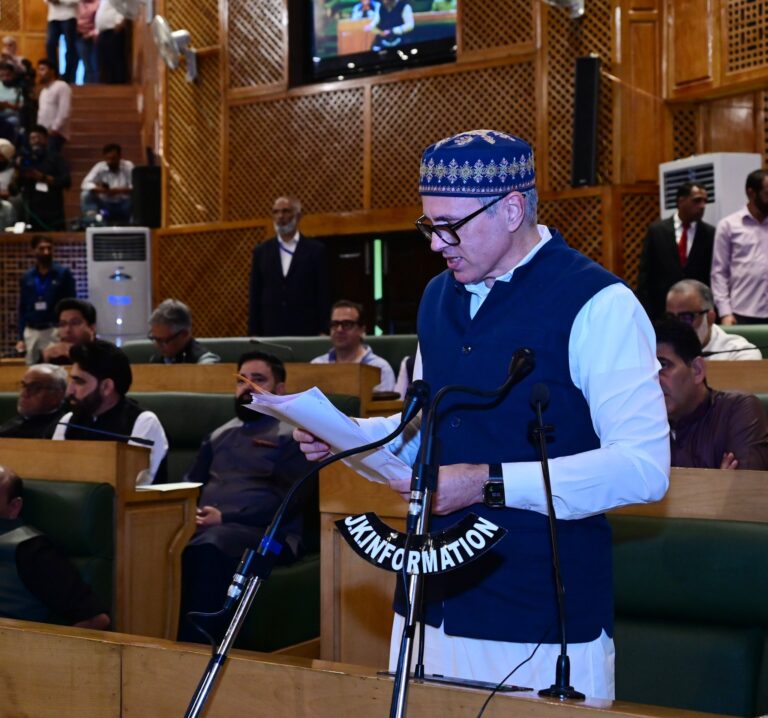
During the ongoing Session of the J&K Legislative Assembly, the Chief Minister informed the House that the Government is funding several key beneficiary-oriented schemes from its own resources.During the current financial year, ₹2,211.88 crore has been released to the Social Welfare, Health & Medical Education, Tribal Affairs, School Education, Industries & Commerce and Agriculture Production Departments, of which ₹1,325.07 crore has already been utilised to support beneficiaries across Jammu & Kashmir.
Jammu Police arrested Ashish Sharma at Industry Estate, Digiana, recovering 19.53 grams of heroin-like substance. FIR No. 264/2026 under NDPS Act registered
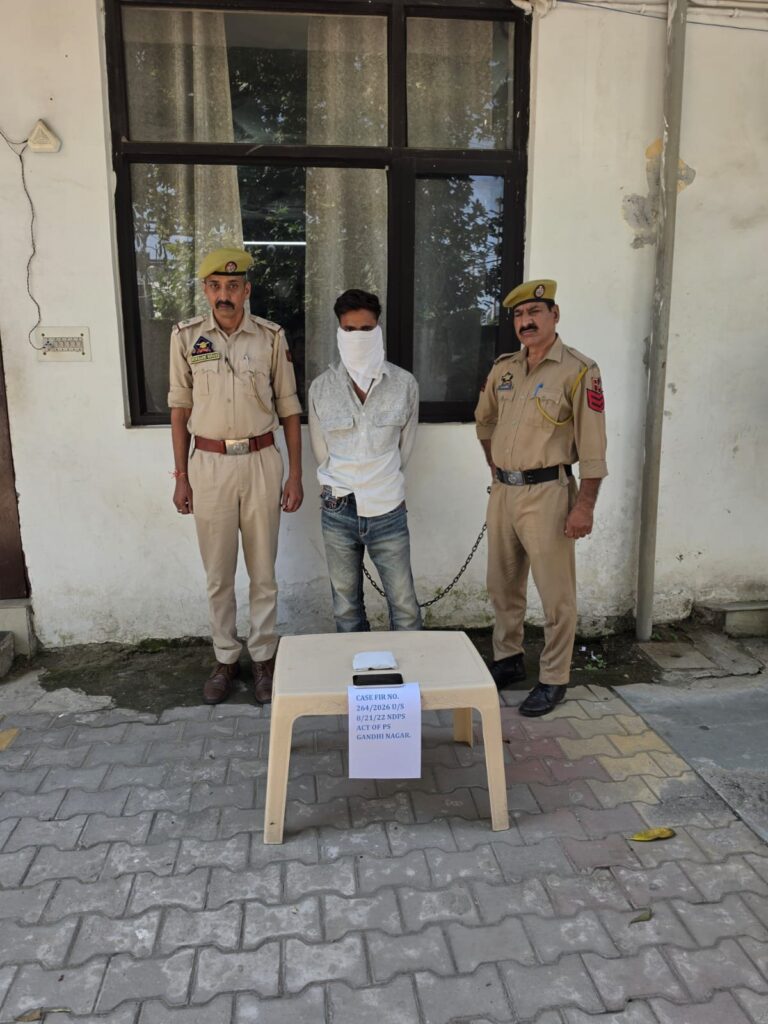
Jammu Police arrested Ashish Sharma at Industry Estate, Digiana, recovering 19.53 grams of heroin-like substance. FIR No. 264/2026 under NDPS Act registered
Anantnag Police arrested drug peddler Muzaffar Ahmad Sheikh S/o Gh Hassan Sheikh R/o Nazuk Mohalla Ganjiwara at Ashajipora. 3g Charas stick & 357g Ganja recovered. FIR No. 319/2026 registered at and investigation underway
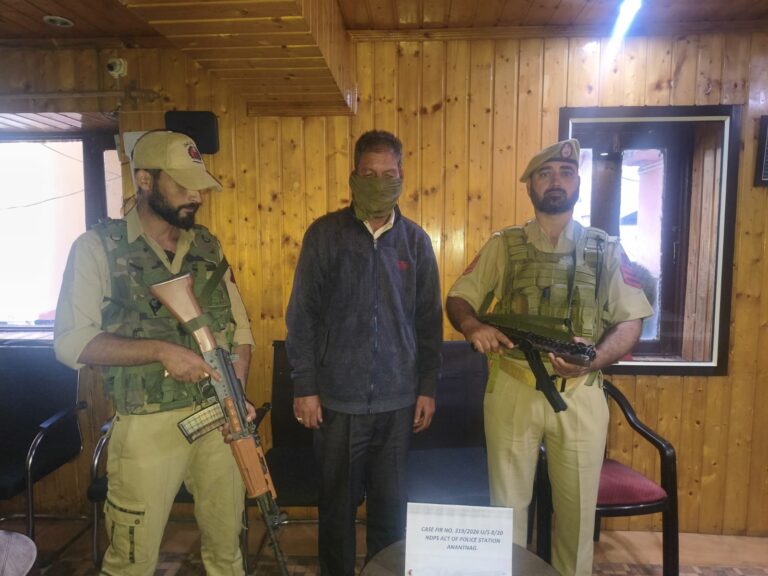
Anantnag Police arrested drug peddler Muzaffar Ahmad Sheikh S/o Gh Hassan Sheikh R/o Nazuk Mohalla Ganjiwara at Ashajipora. 3g Charas stick & 357g Ganja recovered. FIR No. 319/2026 registered at and investigation underway.
Baramulla Police intensifies action against illegal mining. Two motors seized at Veerwan Baramulla, while tipper JK05D-2690 was seized at Jetty Khawjabagh. Mining Department initiated action against violators
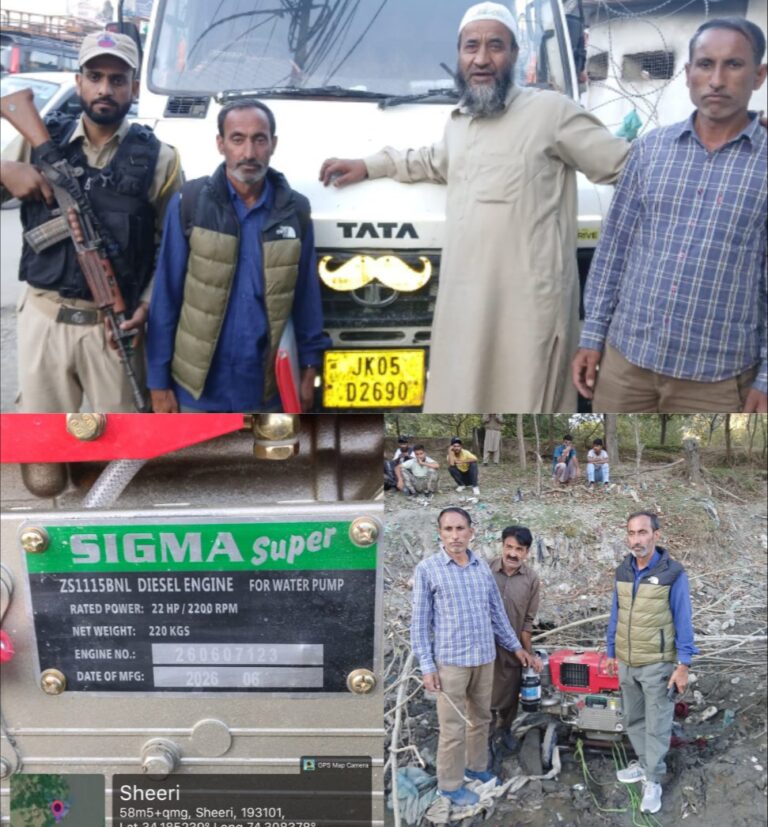
Baramulla Police intensifies action against illegal mining. Two motors seized at Veerwan Baramulla, while tipper JK05D-2690 was seized at Jetty Khawjabagh. Mining Department initiated action against violators.
DC Poonch Ashok Kumar Sharma felicitated NEET & academic achievers at Shia Federation’s ceremony in Town Hall, Poonch. He called upon students to pursue goals with hard work and dedication
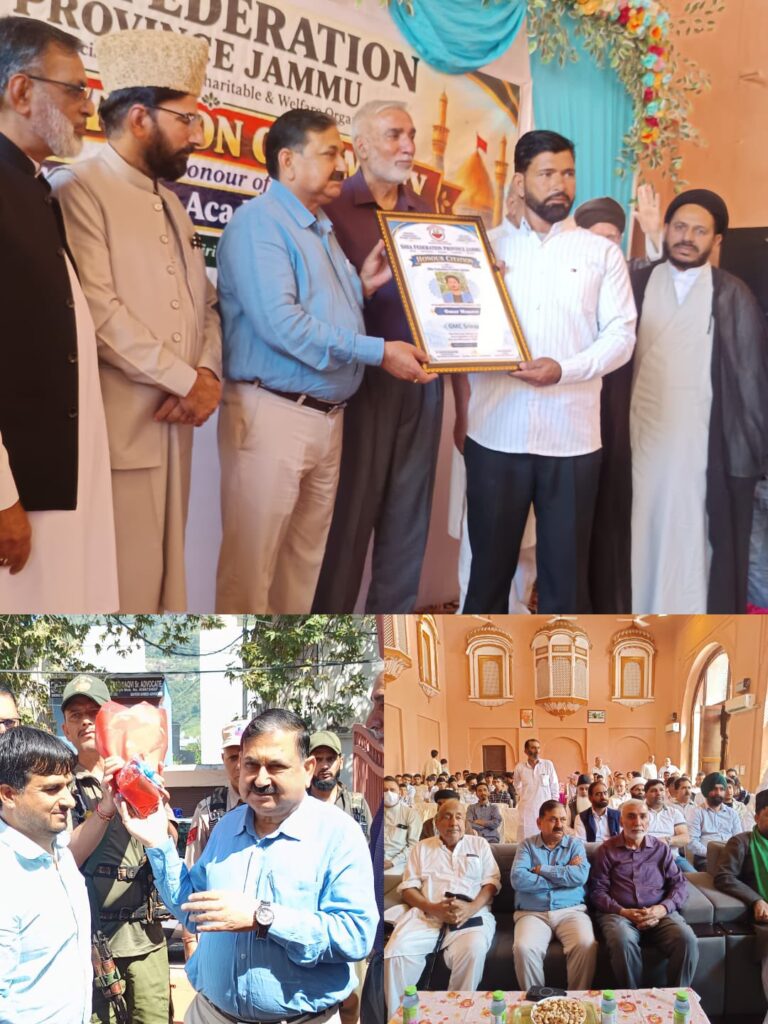
DC Poonch Ashok Kumar Sharma felicitated NEET & academic achievers at Shia Federation’s ceremony in Town Hall, Poonch. He called upon students to pursue goals with hard work and dedication.
J&K POLICE KATHUA FOILED BOVINE SMUGGLING BID AT PANDORI BRIDGE, NAGRI; 04 BOVINES RESCUED & 01 MAHINDRA LOAD CARRIER SEIZED
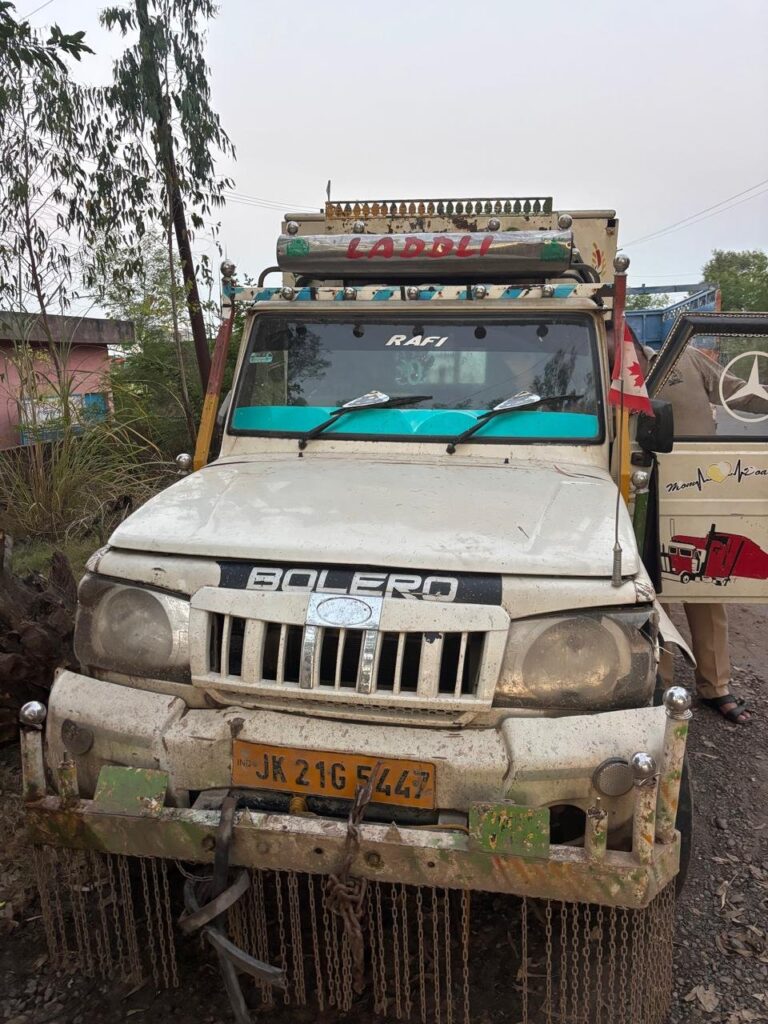
J&K POLICE KATHUA FOILED BOVINE SMUGGLING BID AT PANDORI BRIDGE, NAGRI; 04 BOVINES RESCUED & 01 MAHINDRA LOAD CARRIER SEIZED.
Kathua Admin to host District Marathon-2026 on October 4
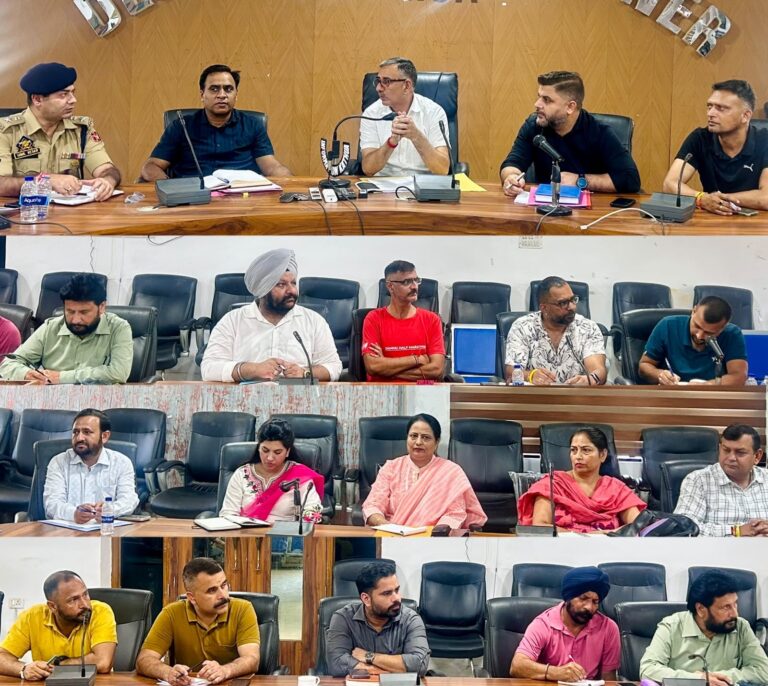
Kathua Admin to host District Marathon-2026 on October 4
Marathon under Nasha Mukt Bharat Abhiyaan to feature 3 Km, 5 Km and 10 Km races; DC reviews arrangements
Biometric Aadhaar Authentication (BAA) Mandatory for Subsidised Domestic LPG Refills from 1st October 2026
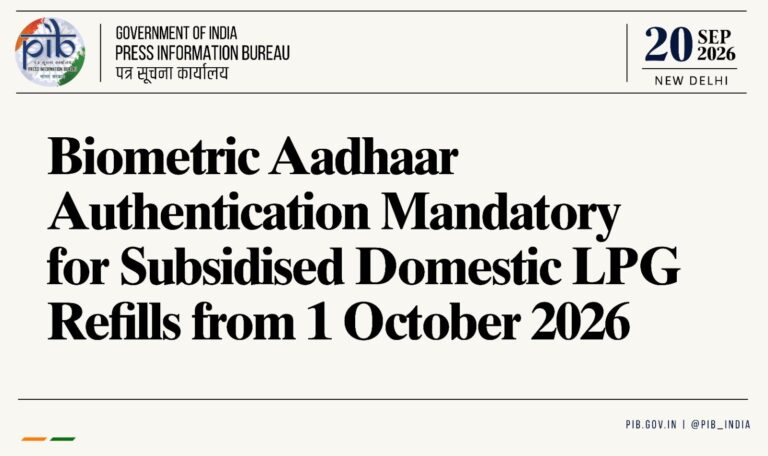
Biometric Aadhaar Authentication (BAA) Mandatory for Subsidised Domestic LPG Refills from 1st October 2026
➤ 27.43 crore consumers (89.9%) have already completed authentication and need not do anything further
➤ BAA ensures that subsidised #LPG reaches only genuine and deserving households. Linking each connection to the #Aadhaar-authenticated consumer helps prevent diversion of subsidised domestic cylinders for commercial and industrial use, removes duplicate and ineligible connections, and makes subsidy delivery transparent and targeted
➤ The process is not meant to deny LPG to any genuine household, and every eligible consumer has several easy ways to complete it
Lieutenant Governor Inaugurates National Dialogue on Millets for Health: Building Healthy Ecosystems, Climate-Resilient Agriculture and Sustainable Food Systems
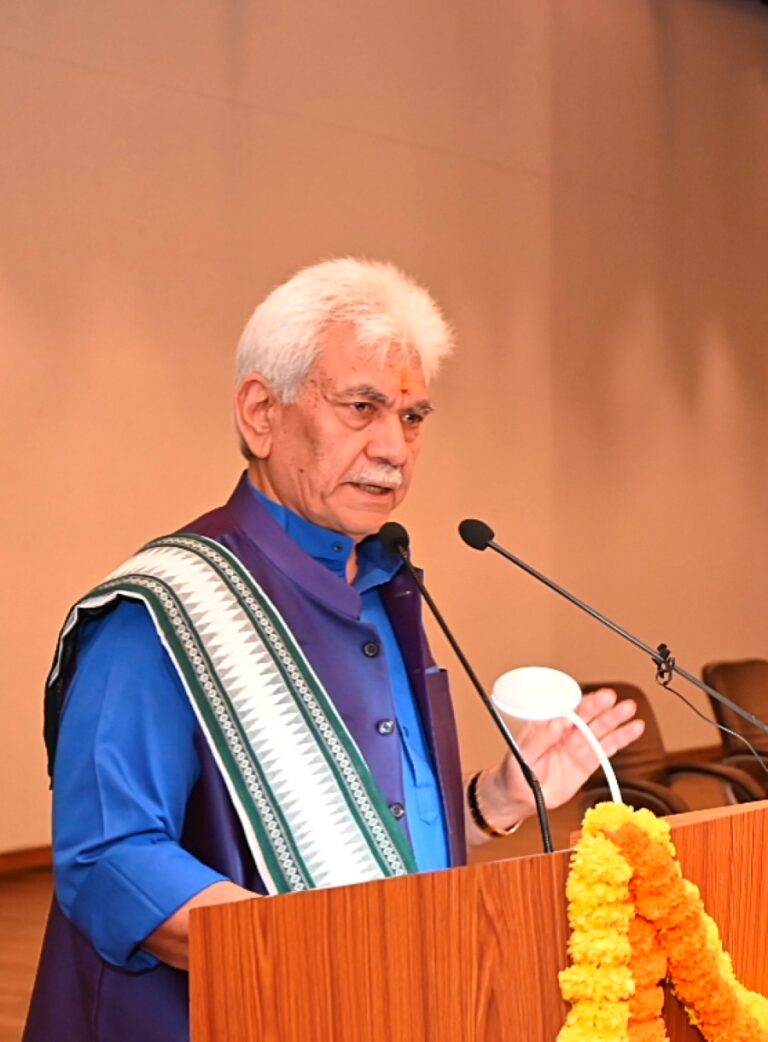
Millets were part of our agricultural memory for centuries. The time has now come to restore them to the consciousness of society: LG
Countries across the world that are facing the challenge of climate change are also realising that the food of the future will not merely be food that can be produced in large quantities. It will have to be nutritious, profitable for farmers and sustainable for the planet: LG Sinha
Under the Holistic Agriculture Development Plan, we prepared a strategy three to four years ago to ensure the health of future generations, the prosperity of our farmers and the protection of our earth: LG
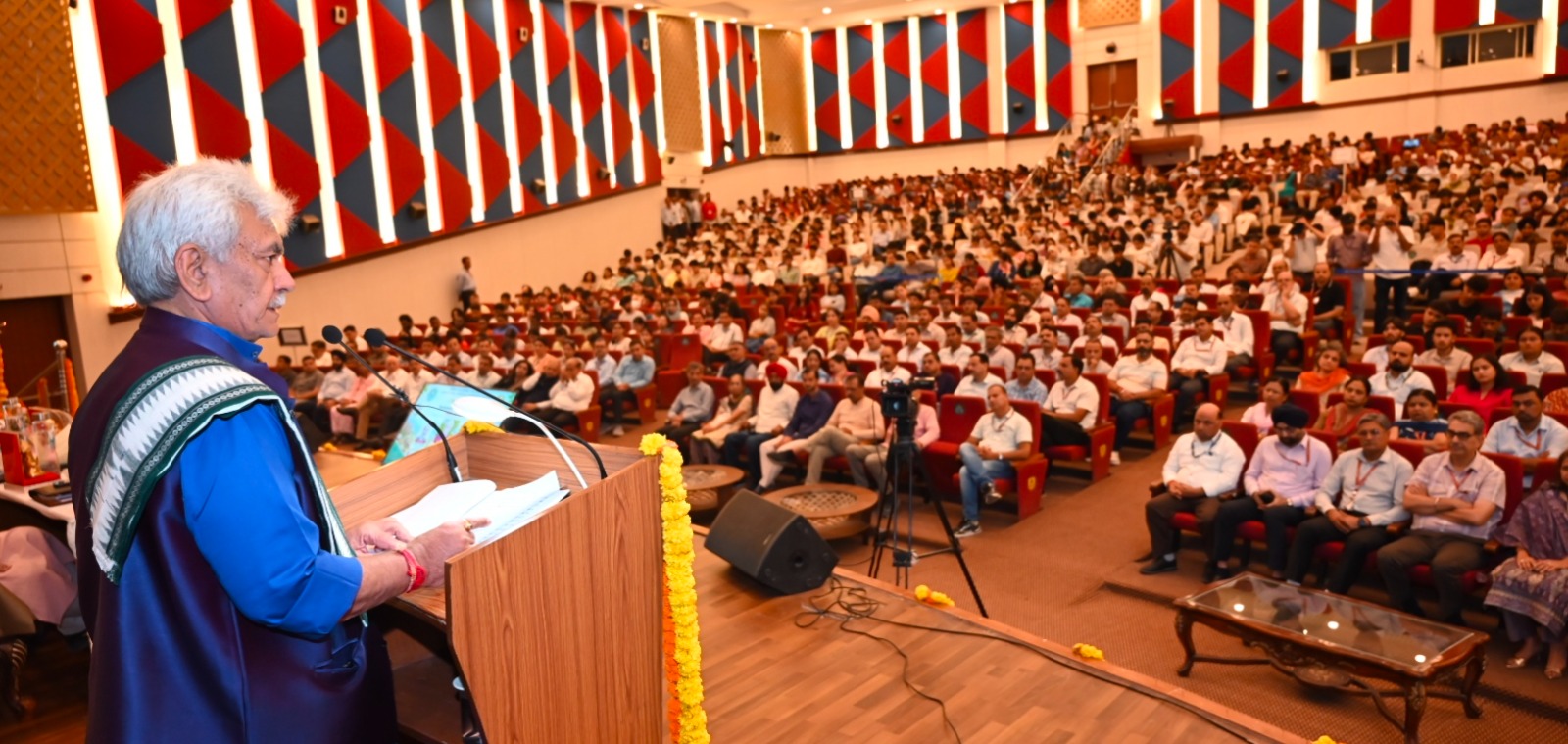 I believe that millet cultivation can give marginal farmers in Jammu Kashmir a new sense of confidence while also helping reduce the risks associated with farming: LG Sinha
Millets offer us a simple lesson from nature: the solutions to many health challenges due to modern lifestyle of today lie within our own traditions: LG
Lieutenant Governor called upon every household to give millet products a place on their plate and strengthen farmers, empower women, and ensure a healthier future for generations
I see Millet’s cultivation as powerful means of empowering women, promoting dignity and respect for women, and reviving the rural economy. The value-added products can shape the region’s next economic success story: LG Sinha
JAMMU, SEPTEMBER 21: The Lieutenant Governor, Shri Manoj Sinha today inaugurated the National Dialogue on Millets for Health: Building Healthy Ecosystems, Climate-Resilient Agriculture and Sustainable Food Systems at SKUAST, Jammu.
Expressing gratitude to Padma Shri Dr. Khadar Vali, popularly known as the “Millet Man of India” and Shri Umendra Dutt of Kheti Virasat Mission, the Lieutenant Governor lauded their efforts in creating a new awakening through the Millets Mission in UT of Jammu Kashmir. He emphasized that the occasion was not merely a seminar but a celebration of a revolution rooted in India’s villages.
The Lieutenant Governor said that the pioneering role of the Hon’ble Prime Minister, Shri Narendra Modi, who declared millets as “nutri-cereals” in 2018 and gave them the name Shree Anna, will be remembered by history. Hon’ble Prime Minister’s initiatives led to the United Nations declaring 2023 as the International Year of Millets, bringing global recognition to India’s traditional wisdom.
Tracing the heritage of millets, the Lieutenant Governor noted that sorghum, pearl millet, finger millet, kodo millet, little millet, foxtail millet, and barnyard millet have nourished generations of farmers and families. Once sidelined as “food of the poor,” millets are now reclaiming their place at the intersection of tradition and modern science. He reiterated the ancient wisdom—“Annam Brahma”-food is divine, and healthy food builds healthy citizens, strong societies, and resilient nations.
“The experts are aware that millets nourished the families of small and marginal farmers in different parts of the country for many decades. At that time, modern irrigation facilities were not available. Marginal farmers had neither access to fertilisers nor accurate weather forecasts. However, millet crops did not require these to the same extent, because they could grow even in the most difficult weather conditions and provide support to families.
Today, science is understanding this traditional wisdom through new research and evidence. Countries across the world that are facing the challenge of climate change are also realising that the food of the future will not merely be food that can be produced in large quantities. It will have to be nutritious, profitable for farmers and sustainable for the planet,” he said.
Highlighting the relevance of millets for Jammu Kashmir, the Lieutenant Governor underscored that over 80% of the region’s farmers are small and marginal, dependent on uncertain weather. Millets, requiring less water and fewer inputs, offer them confidence and sustainability. He urged farmers to embrace millet cultivation as a pathway to self-reliance and resilience against climate change.
“I see the Millets Mission as the greatest hope for the smallest farmer in our villages. Under the Holistic Agriculture Development Plan, we prepared a strategy 3-4 years ago to ensure the health of future generations, the prosperity of our farmers and the protection of our earth.
I believe that millet cultivation can give marginal farmers in Jammu Kashmir a new sense of confidence while also helping reduce the risks associated with farming. On this occasion, I would like to tell all our marginal farmers that although the size of your landholding may be small, your contribution to building a self-reliant Jammu Kashmir can never be small,” he said.
The Lieutenant Governor also emphasized the health benefits of millets, noting their dietary fibre, low glycaemic index, and rich nutrients such as iron, calcium, magnesium, and zinc. He called upon citizens to bring millet-based foods like bajra rotis, ragi dishes, and barnyard millet rice back to their plates to combat lifestyle diseases such as diabetes, obesity, and hypertension.
On the economic front, the Lieutenant Governor highlighted the Hon’ble Prime Minister’s vision of creating a millet economy from farm to market.
“With India producing 18 million tonnes of millets in 2024–25 and accounting for 38% of global production, the importance of value-added millet products is immense. We must encourage women’s self-help groups and young entrepreneurs in Jammu Kashmir to innovate with millet-based enterprises, packaging, and branding under initiatives like One District, One Product,” he said.
The Lieutenant Governor urged all stakeholders including farmers, researchers, doctors, entrepreneurs, and citizens, to make food systems diverse, nutritious, sustainable, and resilient.
“I call upon every household to give millet products a place on their plate and strengthen farmers, empower women, and ensure a healthier future for generations. I also want all of you to carry this message to the villages that millets are not merely a heritage of the past but they are a strategy for the future of Jammu Kashmir. Let us work together to ensure that every village has opportunities and future generations inherit a healthy planet,” the Lieutenant Governor said.
On the occasion, the Lieutenant Governor released several publications including ‘A Laboratory Manual on Soil Microbiology’; ‘Fundamentals of Geographical Information Systems and Remote Sensing’, and ‘Package of Practices for Minor Millets’.
Padam Shri Dr Khadar Vali; Prof BN Tripathi, Vice Chancellor, SKUAST Jammu; Shri Umendra Dutt, Executive Director, Kheti Virasat Mission; Dr. Anjani Kumar, IFPRI; Prof. SK Gupta Director Research, SKUAST Jammu; experts, policy makers, researchers; senior officials, progressive farmers, agri-preneurs, members of Self-Help Groups, faculty and students attended the inaugural ceremony.
Village Heads Of Ladakh Get More Than Three-Fold Hike In Emoluments
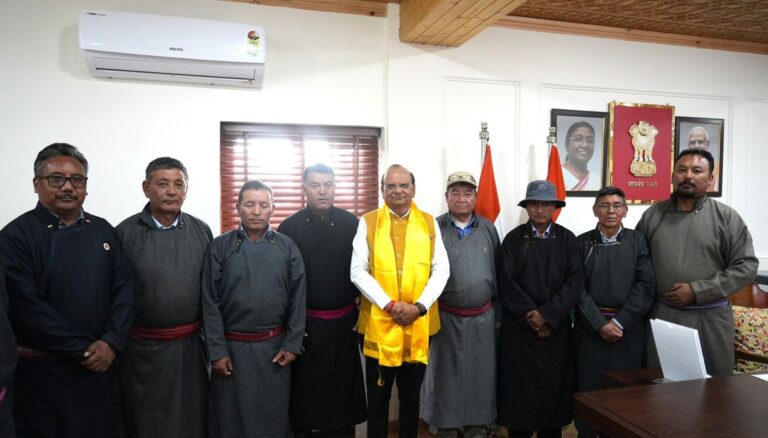
Monthly emoluments of village heads, locally known as ‘gobas’, in the Union territory of Ladakh have been hiked more than three-fold from Rs 1,500 to Rs 5,000, after Lieutenant Governor Vinai Kumar Saxena gave his approval.
The increase in emoluments by over 233 per cent is the first revision in the last 10 years, which will benefit 247 ‘gobas’ across Ladakh, officials said.
The lieutenant governor said the decision would provide greater financial support to village heads, also known as ‘nambardars’ and strengthen participatory governance at the grassroots level, particularly in remote and difficult-to-access areas.
The revised emoluments will come into force from the date of publication of the notification in the official gazette.
The officials said that the decision follows a long-standing demand of ‘nambardars’ to increase their emoluments.
“During his visits to villages across Ladakh, Saxena had received representations from ‘gobas’ regarding the issue. On September 19, a delegation of ‘nambardars’ from different villages also met the LG and sought an increase, citing their responsibilities and the inadequacy of the existing emoluments,” they said.
Taking note of their concerns, Saxena directed the chief secretary to examine the matter and address the issue.
“Nambardars occupy an important position at the grassroots level and act as a link between the administration and villagers,” they said. Their role has assumed greater significance with the focus on last-mile delivery of public services and implementation of government initiatives, they added.
The officials said their regular engagement with villagers helps communicate local requirements to authorities while enabling people to access various government schemes and services.
The LG also noted the proactive role played by ‘nambardars’ in highlighting local issues. “Several water-related issues addressed in villages through initiatives undertaken by him were based on inputs provided by the gobas”, they said.
“The role of nambardars is crucial because they remain closely connected with the people and serve as a vital link between the administration and our villages. The enhancement from Rs 1,500 to Rs 5,000 per month recognises their responsibilities and long-standing demand,” Saxena said.
“I am confident this step will further strengthen their role in ensuring that development programmes, welfare schemes and government services reach every household in a timely and effective manner, while further strengthening participatory governance,” he said.
The revised emoluments have been fixed under the provisions of the Jammu and Kashmir Lambardari Act, 1972 and the Jammu and Kashmir Lambardari Rules, 1980, as applicable to the Union Territory of Ladakh. (Agencies)