


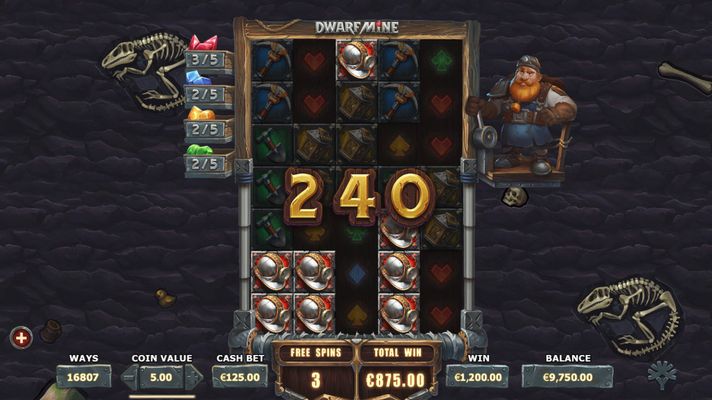
Mine Slot is a solitary mining-themed slot game, and what makes it deserving of a closer look is how lock-and-spin mechanics can alter the rhythm of a session. I treat it as a game-first review: theme, grid, win rules, RTP, volatility, bonus features, bet range, and max win. Because the title points at lock and spin features, I will show how those features usually work, what they impact volatility, and how to test them without guessing. I will not claim every build has identical numbers. Instead, I will flag what to verify in the paytable and game info panel. If you desire a practical read on Mine Slot rather than marketing language, this is the route I take, and I will keep the focus on the game itself rather than anything around it. That makes the advice usable whether you are exploring the demo or playing for real.
Mine Slot’s Motif and Base Game Rhythm
Regarding the base game, I begin with the mining theme because it indicates what to look for from symbol hierarchy and pacing. Mine Slot uses a cavern-and-tools aesthetic, so I review the paytable for the actual high and low symbols rather than assuming a gem is premium. I examine whether low symbols are card-style icons or mining tools, how often premium symbols appear, and whether the base game rewards frequently but small or rarely but larger. The pace matters: a base game that sustains the reels moving with modest returns makes lock-and-spin triggers seem like a real change of gear. I also watch for dead-spin clusters and near-miss teases, because those influence how volatile the session seems in practice. The theme is not just ornament here; it frames the feature, and I employ it to judge whether the game’s pace fits a short test or a longer session.
Lock & Spin Mechanics Stage by Stage
Lock and spin is the feature I need to grasp first, because it changes the decision making around bet size. The core idea is simple: certain symbols lock into position, then you receive respins while the fixed set remains on screen. If more lock symbols land, the respin count typically resets, and the round continues until the respins are exhausted or the grid fills. In Mine Slot, I check whether the function is triggered by a number of symbols, a scatter combination, or a chance event, and whether it can be bought directly where that possibility is present. I also check whether pinned symbols carry cash values, multipliers, or jackpot tags, because that changes the mechanic’s limit. As reference points, I contrast known lock-and-spin titles from Relax Gaming and Push Gaming, but Mine Slot’s own paytable stands the reference. The following sequence is the one I employ to analyze any lock-and-spin round without assuming details that are not in the paytable.
- Confirm the trigger and whether it can occur in the standard game.
- Record the beginning respin total and reset condition.
- Review what fixed symbols are valued at and whether they combine.
- Search for multiplier, jackpot icons, or collector icons.
- Verify the function maximum and any max win rule.
Theoretical payout Fluctuation, and Session Expectations
Theoretical payout and variance are the two values I consider as planning tools, not assurances. For Mine Slot, I review the in-game info panel for the stated RTP because the same game can show up in different configurations with different numbers. If no figure is displayed, I consider any mentioned number as unverified. In the wider slot market, RTP often stands around 94% to 96.5%, but I do not apply that span onto this game. Variance is easier to perceive than to label: low variance tends to yield regular smaller payouts, while high fluctuation relies on rarer, larger fluctuations. Lock-and-spin mechanics usually move a game toward the upper end because the mechanic can extend with each locked character. I evaluate volatility with a demo session and monitor how often the feature triggers, how long the base game stalls, and whether my funds lasts long enough to witness the mechanic. That is more useful than arguing about a single percentage point.
Wagering Options, Max Win, and Fund Management
Bet range and top prize are where I become realistic about funds. The slot should present a wager tool with a base and maximum bet, and I review both before spinning. The base shows whether I can test the feature at low cost; the top shows whether the title is built for high-roller play. I do not presume a set amount, because the identical game can be configured variously across releases. Max win is just as crucial: I look for a stated cap, whether it is shown as a multiplier of stake or a fixed amount, and whether the lock-spin feature is the path to that ceiling. A large top prize with infrequent hits is not always superior; it can result in extended droughts. I also verify whether any jackpot is fixed or growing, because increasing jackpots shift the risk profile. I establish a gaming fund, pick a wager that allows me to view enough spins for the feature to emerge, and avoid chasing a cap that the paytable does not definitely confirm.
Wilds, Scatter icons, Multiplier symbols, and Free Spin rounds
Wilds, scatters, multiplier symbols, and free spin rounds are the supporting cast, and I examine each one on their own because they do distinct roles. A wild substitutes for normal symbols to form a win; a scatter symbol usually activates or re-triggers a special round and might award regardless of position. Multipliers can take effect to winning lines, feature prizes, or the entire round, so I confirm where they apply. Free spin rounds may run on the identical grid or a modified set of reels, and that distinction is important because a feature-only reel set can shift volatility. In Mine Slot, I search for if the lock-and-spin bonus is the main bonus or one of multiple, and if bonus spins can be re-activated. I also verify if multiplier icons are combined or multiplied, because this is the difference between a small increase and a major limit. The following list is my rapid bonus check before I evaluate the game’s bonus frequency.
- Wild rules: substitution scope and any attached multiplier.
- Scatter rules: activation count, reward, and role in retriggers.
- Free spins: initial number, retrigger rules, and reel changes.
- Multiplier symbols: their application timing and if they stack.
- Bonus limits: maximum win, prize cap, or maximum rounds.
Reels and paylines, Paylines, and Ways-to-Win
Paylines and reels, winning lines, and ways-to-win are the criteria I review before pressing the spin button. Mine Slot’s exact layout is detailed in the paytable, so I do not assume a standard five-reel, three-row setup just because it is common. I confirm the number of reels and rows, then determine whether wins are paid on fixed paylines, adjustable paylines, or ways-to-win. Fixed lines are simple to manage because the cost per spin is sport.fakt.pl consistent; adjustable lines can reduce the stake but also reduce coverage. Ways-to-win usually payout for matching symbols on adjacent reels from left to right, and that alters how often you see a return. I also verify whether scatter symbols payout anywhere, whether line wins must begin on reel one, and whether the lock-and-spin feature uses the same grid or a separate layout. Those details decide whether a near miss is genuinely close or just visual noise.
How to Play Mine Slot and Assess the Lock-and-Spin Fit
To try Mine Slot, I start in demo mode, check the paytable, and verify the grid, win rules, RTP, volatility label, bet range, and feature triggers. Then I run a short session at a low stake and count how often the lock-and-spin feature triggers, how many respins I receive, and whether the locked symbols feel meaningful. I adjust stake only after I understand the pace. If the feature is the main draw I am playing, I verify whether it can be bought directly and what that prices relative to my budget. I also weigh the base game’s hit rate with the feature’s payout profile, because a game can appear generous in the bonus and starve the base game. The objective is not to push a big win; it is to figure out whether the lock-and-spin loop suits my tolerance for swings and my session length.
My takeaway is that Mine Slot should be assessed by how its lock-and-spin loop behaves, not by a headline number alone. I would check the paytable first, explore the feature in demo, and only then pick a stake that matches the volatility I actually saw. If the trigger seems too rare for your budget, shorten the session or move on; if the respin resets and symbol values line up with your tolerance, the game has a clear purpose in a session. The concrete next step is simple: launch Mine Slot, review the info panel, and run a low-stake test focused on the lock-and-spin round before raising your bet. That single test reveals you more than any promotional claim because it demonstrates the real trigger rhythm, the respin resets, and the size of the feature payouts in the version you are actually playing.