

High-Level Panel Formed to Examine ‘Digital Arrest’ Scams: MHA Tells Supreme Court
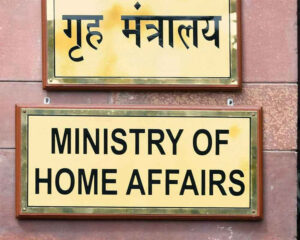
New Delhi, Jan 15: The Ministry of Home Affairs (MHA) on Thursday informed the Supreme Court that it has constituted a high-level inter-departmental committee to examine issues related to the growing number of “digital arrest” scam cases across the country.
Digital arrest is an emerging form of cybercrime in which fraudsters impersonate law enforcement officials, court authorities, or government personnel to intimidate victims through audio and video calls. Victims are coerced, virtually held hostage, and pressured into transferring money.
In December last year, the Supreme Court had directed the Central Bureau of Investigation (CBI) to conduct a unified pan-India probe into digital arrest scams. The directions were issued in a suo motu case initiated on a complaint by an elderly couple from Haryana. The court had also sought inputs from various Union ministries, including the MHA, on measures to address cybercrime.
In its submission, the MHA said the committee has been constituted under the chairmanship of the Special Secretary (Internal Security) to comprehensively examine digital arrest cases and related challenges.
The committee’s mandate includes assessing real-time issues faced by enforcement agencies, considering recommendations of the amicus curiae and directions of the court, identifying relevant laws, rules, circulars and implementation gaps, and suggesting corrective measures along with inputs for further directions.
According to the MHA, the committee comprises senior officers from the Ministry of Electronics and Information Technology (MeitY), Ministry of External Affairs (MEA), Department of Financial Services, Ministry of Law and Justice, Ministry of Consumer Affairs, Reserve Bank of India (RBI), CBI, National Investigation Agency (NIA), Delhi Police, and the Indian Cyber Crime Coordination Centre (I4C). The Chief Executive Officer of I4C will act as the committee’s member-secretary.
The committee will meet every two weeks. Its first meeting was held on December 29, during which the CBI suggested prescribing a monetary threshold for cases.
The MHA said MeitY highlighted the need to strengthen and activate the adjudication mechanism under provisions of the Information Technology Act. The Department of Telecommunications (DoT) informed the committee that draft rules under the Telecommunications Act, once notified, would address issues such as negligence in issuance of SIM cards, multiple SIMs issued to a single individual, and related concerns.
The I4C informed the committee that standard operating procedures (SOPs) for immediate freezing, de-freezing, recovery, and restoration of money to victims are under final consideration. Revamping of the National Cybercrime Reporting Portal (NCRP) and the 1930 cybercrime helpline is also being actively considered.
The committee also deliberated on the amicus curiae’s suggestion regarding victim compensation and agreed that relief could be provided in cases where losses were attributable to negligence, deficiency of service, or fraud by banks or telecom service providers.
The MHA said the committee observed that victims should not suffer due to systemic failures or regulatory non-compliance.
Seeking additional time, the MHA requested one month for further deliberations and submission of inputs. The Supreme Court has posted the matter for further hearing on January 20.
