


Mission Poshan 2.0– Strengthening India’s Nutrition Ecosystem
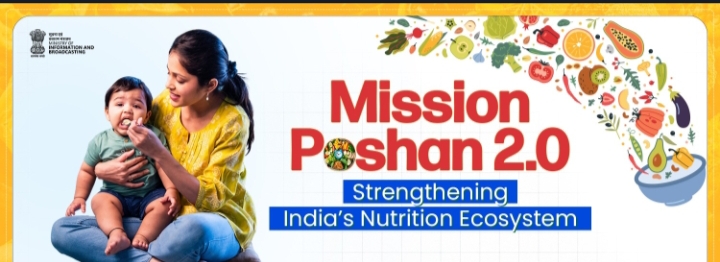
Mission Poshan 2.0– Strengthening India’s Nutrition Ecosystem
Ministry of Information and Broadcasting POSHAN Abhiyaan (Prime Minister’s Overarching Scheme for Holistic Nourishment) is a flagship, multi-ministerial mission to place nutrition at the centre of India’s national development agenda. The mission marked a shift in India’s approach from treating nutrition primarily as a welfare concern, to recognising it as a national priority linked to human capital development, the Sustainable Development Goals (SDG) and long-term growth. Over the past eight years, POSHAN Abhiyaan has transformed India’s nutrition governance architecture – embedding convergence, digital monitoring and community mobilisation into the framework.Crucially, POSHAN Abhiyaan was designed around a lifecycle and preventive approach — rather than solely addressing acute malnutrition after it occurs. The mission places special emphasis on the first 1,000 days — from conception to two years of age — as this period is critical for physical growth, brain development and long-term health outcomes.For several decades, nutrition interventions in India were implemented through multiple schemes, targeting different groups, across different ministries. While these addressed different aspects of nutrition, the approach remained largely sector specific. Over time, the need for convergence and coordinated implementation was recognised. The Union Budget 2021–22 further consolidated India’s fragmented nutrition initiatives under Mission Poshan 2.0 (Mission Saksham Anganwadi and Poshan 2.0), creating a unified and integrated framework. This restructuring subsumed the Anganwadi Services scheme, Scheme for Adolescent Girls and POSHAN Abhiyaan scheme.The consolidation sharpened the focus on maternal nutrition, infant and young child feeding norms, and the treatment of Severe Acute Malnutrition/Moderate Acute Malnutrition. It also emphasised wellness through AYUSH-based practices to reduce wasting, stunting, anaemia and underweight prevalence. The mission is re-structured and operates through the following primary verticals:Nutrition Support for children, pregnant women &lactating mothers and adolescent girls.Early Childhood Care and Education (3-6 years) and early stimulation for (0-3 years)Anganwadi Infrastructure including upgradation of centres into Saksham Anganwadi.As POSHAN Abhiyaan completes eight years, the mission reflects the growing emphasis on convergence, technology-enabled governance and community participation in addressing nutrition challenges. The programme’s evolution demonstrates the importance of coordinated action across sectors, strengthened service delivery platforms and sustained behavioural change efforts in improving nutrition outcomes.The transition to Mission Poshan 2.0 underscores a continued focus on improving service quality, expanding early childhood care and strengthening last-mile delivery systems. By integrating nutrition with health, early childhood care, education and community engagement, the mission adopts a comprehensive approach to supporting vulnerable populations.Nutrition is closely linked to the development of human capital in the country, as improved nutrition contributes to better health, learning outcomes and productivity. As India advances towards the vision of a Viksit Bharat by 2047, continued investments in nutrition, early childhood development and service delivery systems will remain critical for building a healthy, productive and resilient population.