

Illegal and Invalid: MEA Rejects Chinese Buildup Through CPEC in Shaksgam Valley
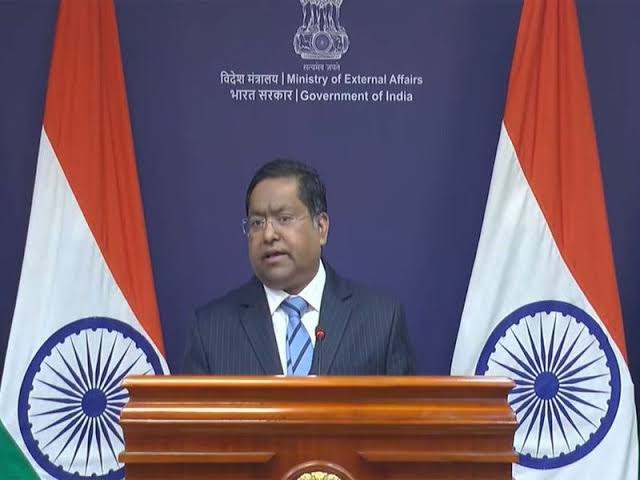
New Delhi, Jan 10: India on Friday strongly rejected China’s infrastructure development through the China-Pakistan Economic Corridor (CPEC) in the Shaksgam Valley, calling it “illegal and invalid” and reiterating that the region is an integral and inalienable part of Indian territory.
Addressing a weekly media briefing, Ministry of External Affairs spokesperson Randhir Jaiswal said India has never recognised the so-called China-Pakistan boundary agreement of 1963 or the CPEC project that passes through Indian territory under Pakistan’s illegal occupation.
“Shaksgam Valley is an Indian territory. We have never recognised the so-called China-Pakistan boundary agreement of 1963. We have consistently maintained that the agreement is illegal and invalid. We do not recognise the so-called China-Pakistan Economic Corridor either, which passes through Indian territory under the forcible and illegal occupation of Pakistan,” Jaiswal said.
He reaffirmed that the entire Union Territories of Jammu and Kashmir and Ladakh are an integral and inalienable part of India. Jaiswal added that New Delhi has repeatedly conveyed its position to both China and Pakistan and has consistently protested against attempts to change the ground situation in the region.
“The entire UTs of Jammu and Kashmir and Ladakh are an integral and inalienable part of India. This has been clearly conveyed to the Chinese and Pakistani authorities several times. We have consistently protested with the Chinese side against its attempts to alter the ground reality in the Shaksgam Valley. We also reserve the right to take necessary measures to safeguard our interests,” he said.
The remarks came in response to reports about China’s construction of roads and military-related infrastructure in the Shaksgam Valley, a trans-Karakoram region that Pakistan ceded to China under the so-called 1963 boundary agreement.
India has maintained that the China-Pakistan alignment in the Karakoram region of Pakistan-occupied Kashmir violates its legal and traditional rights. New Delhi has also repeatedly objected to Chinese activities aimed at altering the status quo, particularly in areas affecting India’s sovereignty and territorial integrity.
India continues to raise concerns over China’s increasing military and strategic presence along the Line of Actual Control and in Pakistan-occupied territories, stressing that such actions undermine regional stability.
